

Ecumen Joining City of Apple Valley In Design Workshop Focused on Making Aging Advantageous to Cities
How does a city actually become “age friendly” to create competitive advantage amidst unprecedented demographic change?
Answers will come in a unique three-day work workshop September 30th to October 2nd in Apple Valley, Minnesota, which like most American communities is grappling with these very questions as their populations grow older in record numbers. Local, national and global experts from diverse sectors will create a roadmap for Apple Valley and cities globally that desire to turn “Age Friendly Community” from a phrase into a reality.
The workshop will be convened by Vitalocity! – a new consultancy founded by a group involving Ecumen , Kendal Corporation a Pennsylvania-based senior services nonprofit company, and BusinessLab, a UK-based global strategy consultancy. From September 30 through October 2, these founding partners will be joined by Apple Valley residents and community leaders along with representatives from global organizations such as the International Federation on Ageing, a World Health Organization (WHO) partner; Perkins Eastman, an international architectural and design firm; Sodexo, which provides nutritional and other quality of life services to more than 75 million consumers worldwide and global technology company, IBM.
The Problem: Our Cities Aren’t Designed for Aging
In today’s cities, if you’re not spry and mobile, you’re largely out of luck. This isolates people, limits their contributions to a city’s social and economic vitality, and can have significant health impacts.
Exploring this phenomenon in depth, WHO created the WHO Age Friendly City Framework, which provides eight characteristics (below) necessary for an age friendly city. The Framework is a critically important step in creating cities for all ages and stages, and more than 250 cities have subscribed to its tenets. But no entity exists globally that cities can turn to for cohesive planning and technical advice to turn the Framework into results.
Vitalocity! seeks to change that by bringing diverse skills and expertise together to help cities deliver phased, measurable, quantifiable results based on the eight components (below) of the WHO’s Age Friendly City Framework:
- Respect and social inclusion
- Outdoor spaces and buildings
- Transportation
- Communications and information
- Social participation
- Housing
- Community support and health
- Civic participation and employment
Our Cities’ Changing Population Driving Age-Friendly Strategy
For the first time in history, more than half of the human population - 3.3 billion people - live in cities. By 2030, this is expected to swell to almost 5 billion. And this population is getting older. For example, in the last 10 years, in every one of America’s 51 largest major metropolitan areas, the number of children relative to the number of elderly has declined. In Pittsburgh, which is America’s oldest city demographically, almost 25% of the metro area’s population is over 60.
Locations long considered magnets for the young and hip are also aging rapidly. In Manhattan and San Francisco, almost 20% of the population is over 60, well above the national average.
According to a new report by Harvard’s Joint Center for Housing Studies and AARP, in 1990, less than 5 percent of U.S. counties had a population where adults over 50 made up more than 40 percent of the community (that was 156 counties). By 2010, this was true of 33 percent of all U.S. counties (or 1,031 of them). The U.S. population over age 65 is expected to include 73 million people by 2030 (that's about 33 million more than today).
And most of these people live in metropolitan areas, particularly suburbs, making Apple Valley an ideal location to launch this important work and turn age friendly design in our world from concept to reality.


Adeline Carlson, a Gold Star Mother Living at Ecumen Detroit Lakes, Remembers That Day — Always
Gold Star Mother Adeline Carlson, a resident of Ecumen Detroit Lakes, remembers that Sunday morning 46 years ago when a serviceman came to her door to tell her that her son Donald had died in the line of duty.

Top Five Blog Posts - September 22
In case you missed out on one of our most popular Changing Aging blog posts, here are the stories Ecumen's online visitors found most interesting last week:
Her Cup Runneth Over: Ecumen Detroit Lakes Chaplain Vicki Marthaler Retires After 19 Years
Media Around Minnesota Discuss Ecumen Scholars Nursing Program
Ecumen Blogger Jim Klobuchar - The Trail Less Traveled
Ecumen Century Club: Happy 101st Birthday, Anna Holst
To read more Changing Aging stories or to learn more about Ecumen, please visit ecumen.org

Her Cup Runneth Over: Ecumen Detroit Lakes Chaplain Vicki Marthaler Retires After 19 Years
Nineteen years ago, Vicki Marthaler became the chaplain at Ecumen Detroit Lakes — not quite sure what she was getting into. As it turned out, she got deeply into people’s hearts and souls, and they returned the favor, giving her riches beyond her wildest dreams.

"A Dance To Remember" at Ecumen Detroit Lakes
Laughter and stories of 50 years of memories filled the Detroit Lakes Pavilion June 20 as more than 300 residents, family, friends, volunteers and employees gathered for "A Dance to Remember." The event, celebrating 50 years of service at Ecumen Detroit Lakes, featured food, beverages, music, dancing, classic cars and beach volleyball.
Last Week's Top 5 Blog Posts- June 30
In case you missed one, here are the blog posts our online visitors found most interesting last week:
Miss Minnesota 1944 Is Much Younger Than Her 90 Years
The Ecumen IT Nurses: Comforting Those Suffering From Technology
Ecumen Century Club: Happy 102nd Birthday Mildred Nelson
Bodybuilder Creates a Boot Camp for the Elderly and Changes Their Lives
Seven Ways To Pay for Long Term Care
To read more Changing Aging blog posts or to learn more about Ecumen, please visit ecumen.org!

Fifty Years of Transformation at Ecumen Detroit Lakes
The 50-year history of Ecumen Detroit Lakes is a compelling story of transformation from nursing home to state-of-the-art community health care hub. Detroit Lakes Online tells the story of how in 1964 a community in dire need of a long-term care center pulled together, going door-to-door to raise the money. Now, a half century later, Ecumen Detroit Lakes is evolving into a national model for rural healthcare delivery. On June 20, Detroit Lakes will celebrate this story of civic involvement as it prepares for the next 50 years with the opening of the new Ecumen care center this fall.

Ecumen Parmly LifePointes Prepares for 19th Annual Golf Tournament
Ecumen Parmly LifePointes’ 19th Annual “Swingin’ for Parmly” golf tournament will take place on June 19 at Chisago Lakes Golf Course.
Each year community members, staff, partner companies and volunteers enjoy a day of golf to raise money for Ecumen Parmly LifePointes. Pictured below are participants from last year's event. This year, the proceeds will go towards buying a utility truck and snowplow that will be used to maintain the grounds.
Registration for the tournament will close June 16th. Please visit parmly.org for more information on registration and details. Contact Mara Krinke (651-257-7956) or Michelle Metzler (651-213-2744) with questions.


Ecumen Receives Shavlik Family Foundation Grant for Technology at New Detroit Lakes Center
The Shavlik Family Foundation has awarded Ecumen an $11,750 grant to bring the latest digital technology to seniors at its new aging services hub in Detroit Lakes, Minn.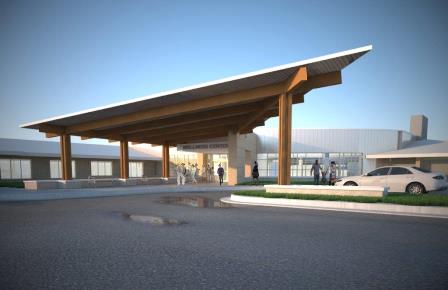
Construction currently is underway for an addition to Ecumen Detroit Lakes designed to transform how senior support services are provided in the area. The project, called The Commons, is envisioned as an innovative "one-stop aging services hub” that integrates technology, socialization, fitness, nutrition and health care to help keep seniors in rural Becker County healthy and independent.
The new addition, expected to open in late summer or early fall, will include a therapy center with a hydrotherapy pool, a wellness center with a bistro, a telehealth center and a business center. The Shavlik Family Foundation grant will help equip the business center.
The business center will offer seniors in the community access to user-friendly technology including high-speed Internet service and other digital and electronic resources such as email access and Skype, iPads, touch-screen computers, wireless printers, as well as faxing, scanning and copying equipment. The center will serve the entire Detroit Lakes and surrounding area, not just residents of the campus.
“We view The Commons approach as a prototype for how senior services will be delivered in rural areas in the future,” said Janet Green, executive director of Ecumen Detroit Lakes. “We are so grateful to the Shavlik Family Foundation for understanding the critical importance of technology in helping seniors age in place and stay connected to the community.”
The Shavlik Family Foundation, of White Bear Lake, Minn., was started by Rebecca and Mark Shavlik with part of the proceeds from the acquisition of their company Shavlik Technologies in 2011, and “recognizes that access to information and technology is a basic need in our modern society and created the Foundation to provide grants to Minnesota-based non-profits to enhance access to and knowledge of technology for non-profits and the people they serve.”
Green said the hub will be a place for people in the community “to learn and have fun,” as well as a place to come for healthcare services. Although seniors are expected to be the primary users, she said the hub will have programs that cross generations.
“We have to reinvent how we care for seniors, especially in rural communities,” Green said. “Using the hub concept and the latest technology we plan to create an environment where seniors can find all the services they need to stay healthy and live independently in their homes — and stay connected to the community.”
Last Week's Top 5 Blog Posts
In case you missed them, here are last week's Top 5 blog posts:
Great Minds Gala Video: Ashley and Shannon Campbell Perform Tribute to their Father
Ecumen's Christy Johnson Gets Very Serious About Fun and Games
Ecumen's Annual Report to the Community
A Look at Alzheimer's Through the Eyes of a Young Doctor
Ecumen Detroit Lakes Receives Grant to Advance Its Dementia-Friendly Work
For more information about Ecumen or its 37 locations, please visit us at ecumen.org.