
Building Better Connections Through Dementia Education at Ecumen Detroit Lakes
Building Better Connections Through Dementia Education at Ecumen Detroit Lakes
By Darcy DeMars | October 28, 2026
DETROIT LAKES, MN (October 28, 2026) — Dementia changes how a person experiences the world, but it doesn’t change their need for connection, understanding, and compassion. Learning how to meet people where they are can make a meaningful difference — both for those living with dementia and for the people who care for them.
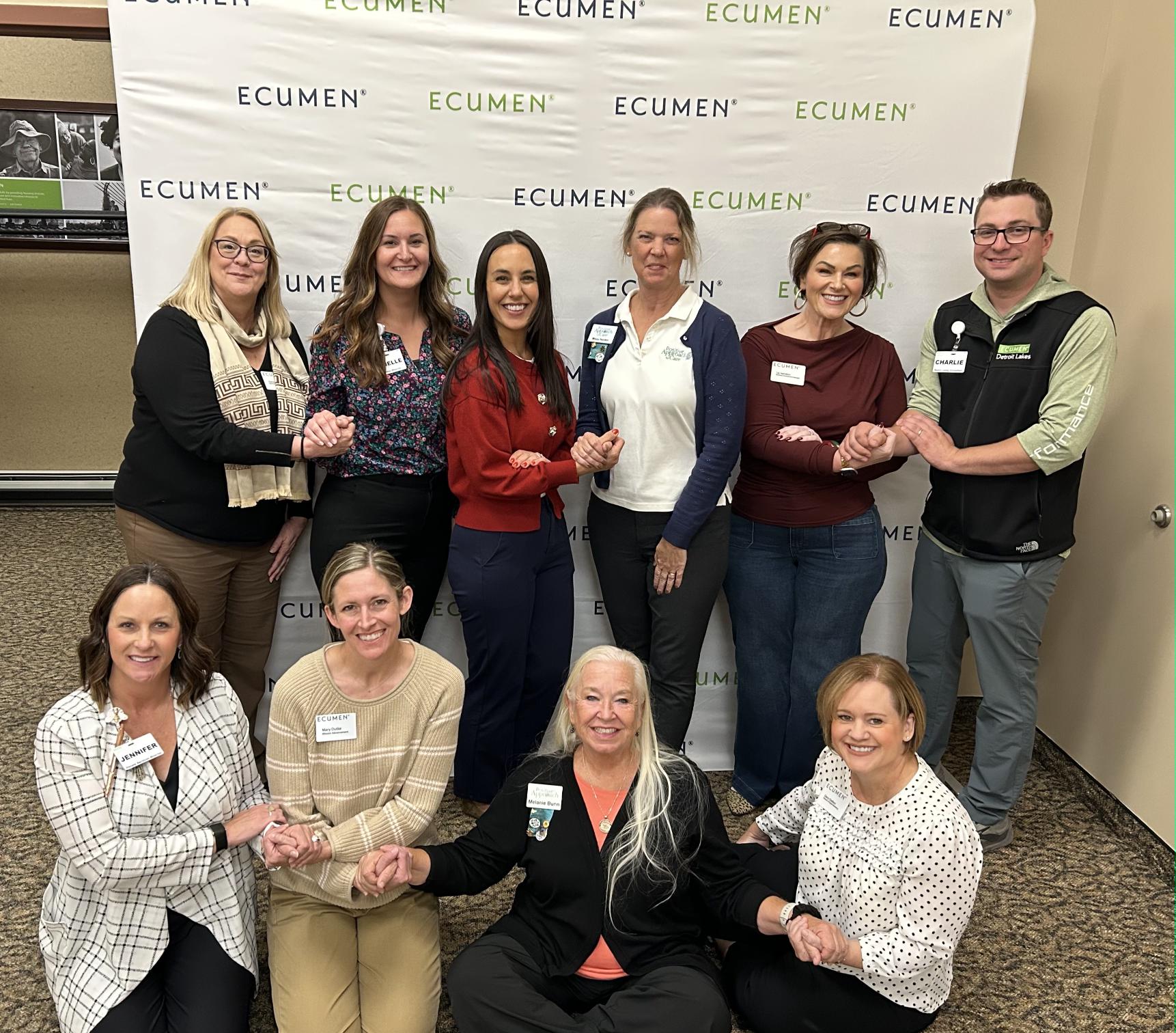
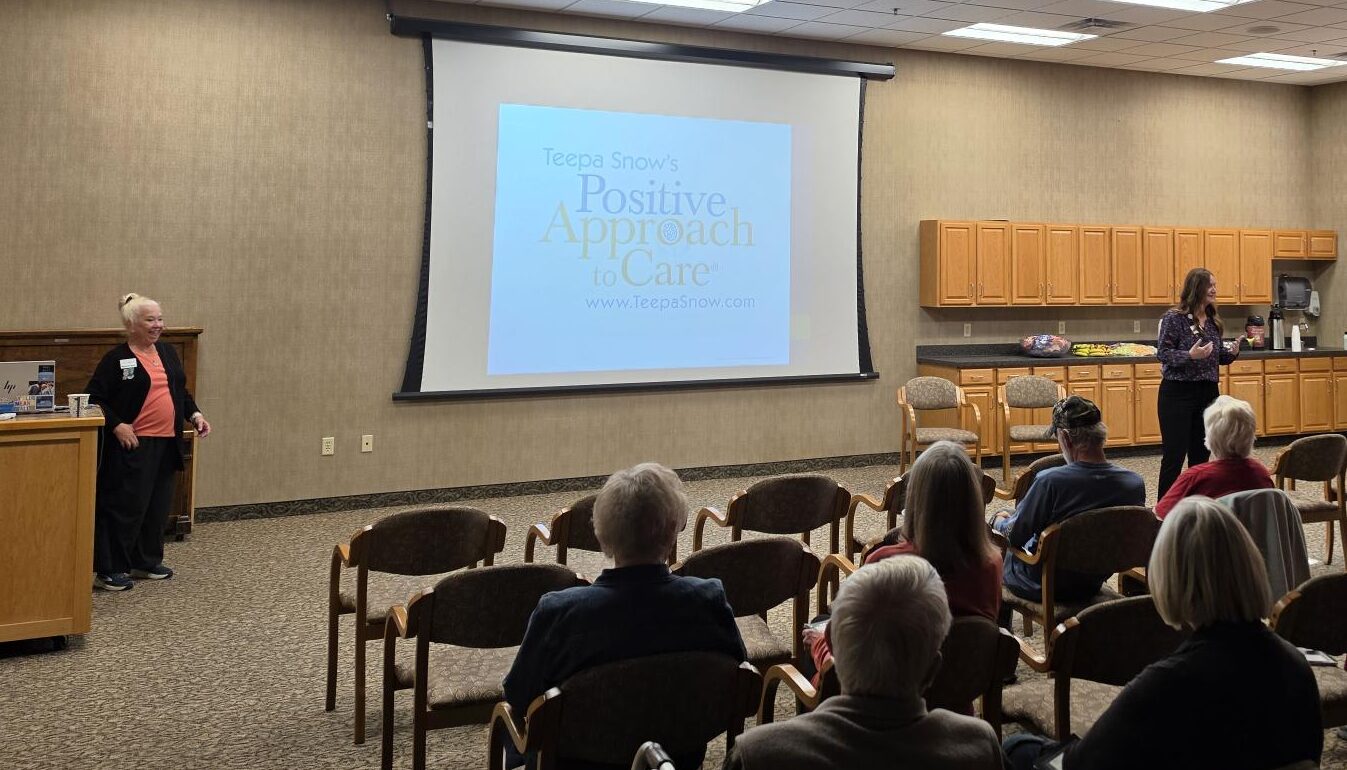 On October 20 and 21, Ecumen Detroit Lakes brought caregivers, families, and community members together for two days of education focused on understanding dementia and building stronger connections with those living with Alzheimer’s disease and other forms of dementia. Both sessions were led by expert trainers Melanie Bunn and Missy Harden from Teepa Snow’s Positive Approach to Care. This training was funded by the New Americans Long-Term Care Workforce grant from the Minnesota Department of Human Services.
The two-day event featured hands-on training for professional caregivers from Ecumen, followed by an interactive presentation for the public, with a special focus on family members navigating the dementia journey with a loved one.
 Learning to See Dementia Differently
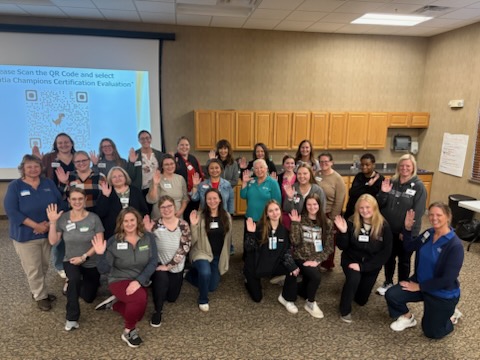
The first day focused on professional caregivers from Ecumen Detroit Lakes and Ecumen’s clinical leadership team, offering a full day of hands-on training and workshop activities designed to strengthen dementia care skills. The training emphasized the importance of understanding how dementia affects a person’s abilities and learning practical ways to adapt care to their changing needs.
For caregivers, this means looking beyond a person’s words or actions to consider what they may be experiencing. When familiar abilities change, everyday tasks and interactions can become more challenging. Learning to recognize those changes can help caregivers respond with greater patience, flexibility, and understanding.
Bobbi Koons, Ecumen’s Nurse Educator said, “The class was wonderful. Relating residents’ stages of dementia to ‘Gem States’ made them easier to understand. We practiced recognizing each person’s ‘Gem’ and meeting them where they are, helping them maintain a sense of control and do what they can for themselves—even as their care needs increase. Each ‘Gem’ is a gift that reflects who they are and where they are in their dementia journey.”
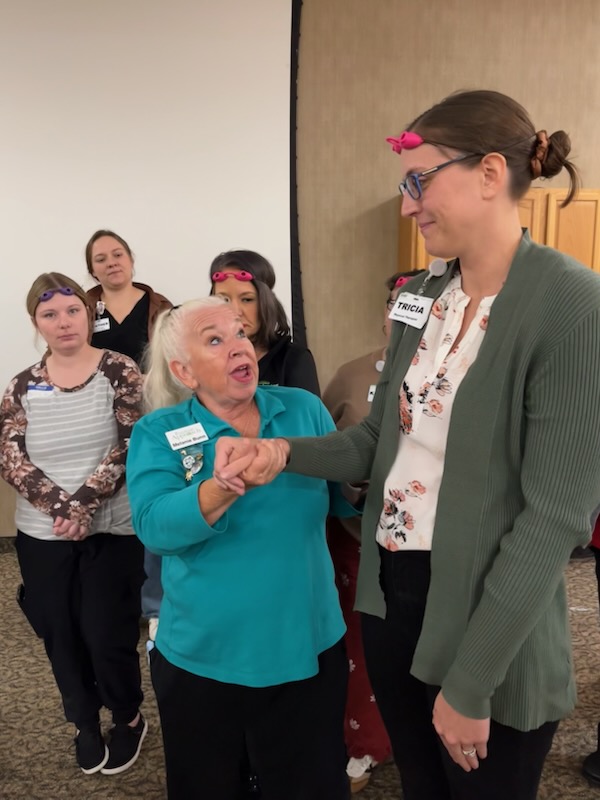 And Ecumen Detroit Lakes Registered Nurse Heather Spier agreed, “The workshop was engaging the entire day and I learned valuable, easy to apply skills to help our residents living with dementia.”
The following day, Ecumen Detroit Lakes opened the conversation to the broader community with a two-hour interactive presentation titled Communication and Dementia. The session explored how changes in the brain can affect communication and offered practical strategies for connecting with a person living with dementia.
One attendee shared, “This training was so eye-opening for me. I understand more now about how the brain takes in and stores information, and how and why sometimes it doesn’t. The tips for how to communicate with my mom, especially the empathetic listening, are things I look forward to trying right away.”
Small Changes Can Make a Big Difference
One of the important messages of dementia education is that effective communication often requires caregivers to change their approach.
Simple strategies can help make interactions more comfortable and successful. Using fewer words, offering visual cues, allowing extra time for a response, and presenting one step at a time can help reduce frustration. Building a connection before attempting a task can also make a difference.
Trainer Melanie pointed out, “Dementia doesn’t ruin relationships; the way we act does.” And learning how to act was taught and practiced during all sessions.
When a conversation or interaction becomes difficult, stepping back and trying a different approach may be more helpful than repeating the same words or instructions.
Just as importantly, caregivers can learn to look beyond what a person says or does to consider the feelings or needs they may be communicating. Approaching these moments with empathy and curiosity can help preserve a sense of dignity and strengthen trust.
For families, these insights can offer a new perspective on everyday interactions with someone they love. For professional caregivers, they reinforce the importance of continually adapting care to the person, rather than expecting the person to adapt to us.
Supporting Caregivers, Families, and the Community
A dementia diagnosis can bring uncertainty and questions for everyone involved. Education can help caregivers and families better understand what is happening, recognize changing abilities, and discover new ways to support meaningful connection.
By bringing professional caregivers and community members together for these learning opportunities, Ecumen Detroit Lakes reinforced its commitment to supporting people living with dementia and the individuals who walk alongside them.
At Ecumen, caring for older adults means recognizing the person behind the diagnosis — their history, preferences, abilities, and need to feel understood. Continued learning helps caregivers put that person-centered approach into practice, even as dementia changes the way a person communicates and experiences the world.
Because sometimes, better care begins with a simple but powerful shift: instead of asking how we can get someone to understand us, asking how we can better understand them.
 To learn more about Ecumen Detroit Lakes and the support available to older adults living with Alzheimer’s or dementia and their families, visit ecumen.org/detroit-lakes.
To schedule a tour, contact Charlie Newland at CharlesNewland@ecumen.org or 218-844-8340.
About Ecumen
Ecumen is a nonprofit organization dedicated to providing innovative housing, health care and community-based services that support older adults and strengthen communities. Mission-driven since its founding in 1862, Ecumen’s legacy of service reflects a commitment to honoring those it serves. Ecumen is based in Shoreview, Minn., and provides housing options such as independent living, assisted living, memory care, short-term rehabilitation and long-term care. Its diverse in-home and community-based services include home care, hospice, physical and occupational therapy, and adult day services. For more information, visit www.ecumen.org.

Ecumen Names Liz Hackenmueller as VP, Strategy & Enablement
Ecumen Names Liz Hackenmueller as VP, Strategy & Enablement
By Lisa Hawks | October 26, 2026
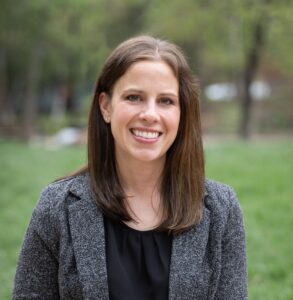 SHOREVIEW, MN (October 26, 2026) — Ecumen, one of the nation’s leading nonprofit providers of senior housing and health care services, today announced that Liz Hackenmueller will join the organization as Vice President of Strategy & Enablement.
In this executive leadership role, Hackenmueller will support the organization’s One Ecumen vision as it works to meet the changing needs of older adults through housing, health care, services and innovation. She will help Ecumen focus on the work that matters most, bring leaders together around shared priorities, and ensure major initiatives continue moving forward. Her role will help create greater alignment across the organization and support thoughtful decisions about where Ecumen invests its time, energy, and resources.
Hackenmueller is an enterprise transformation leader and operational strategist with more than 15 years of experience helping organizations execute complex change, strengthen performance, and build scalable operating systems.
She joins Ecumen from Allina Health, where she spent the past 10 years in progressive leadership roles, most recently as System Director of Improvement for Enterprise Operations. Across her career, Liz has led multi‑site health care operations, guided organizational redesign, and built cross‑functional structures that improve clarity, alignment, and execution. She brings to Ecumen experience building systems that enhance access, community partnerships, quality, workforce engagement, and operational reliability.
“Liz brings a strong ability to connect strategy with action and help teams turn shared priorities into meaningful results,” said Cyrus Batheja, Ecumen’s president and CEO. “Working alongside leaders and team members across Ecumen, she will offer a systems-thinking perspective to help us strengthen our services, advance sustainable growth, and respond to the changing needs of older adults. Her leadership will support our One Ecumen vision and our commitment to the people and communities we serve.”
Hackenmueller holds a Bachelor’s degree in Communication from Bethany Lutheran College, and a Master of Healthcare Administration from the University of Minnesota’s Carlson School of Management and School of Public Health.
The Impact of Spiritual Care: Helping People Find Peace and Purpose
The Impact of Spiritual Care: Helping People Find Peace and Purpose
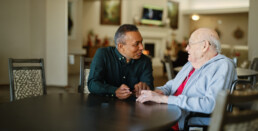
For Michael Hedges, spiritual care is about meeting people where they are, helping families find peace, and making sure no one faces life’s most difficult moments alone.
By Melody Royse | October 21, 2026
SHOREVIEW, MN (October 21, 2026) — During Spiritual Care Week, October 18–24, we celebrate Michael and spiritual counselors across Ecumen who bring comfort and connection to people during life’s most challenging moments.
For 10 years, Michael has been a spiritual counselor at Ecumen, drawing on his 15 years of experience as a chaplain. He meets with patients and their families, leads services and hosts a grief support group twice a month. But perhaps his most important work happens in quieter moments: listening to a person’s life story, helping a family prepare to say goodbye or simply sharing a cup of coffee with someone who is grieving.
“I just fell in love with helping people one-on-one,” Michael says. “I think there’s a heavy taboo in being able to talk about death and dying. But at that point in life, many people feel a sense of release.”
While death can be difficult to discuss, Michael has learned that many people nearing the end of life have made peace with it.
“Many of the people I visit are ready. They’ve lived a good life and their friends are gone. Knowing that they can die well is a good way to say goodbye to this life.”
Spiritual care looks different for everyone. For some, it means prayer, Scripture or communion. Others may want to reflect on their lives, talk through their fears or reconnect with a faith community. Michael serves people of all religions and helps each person find the support that feels right for them.
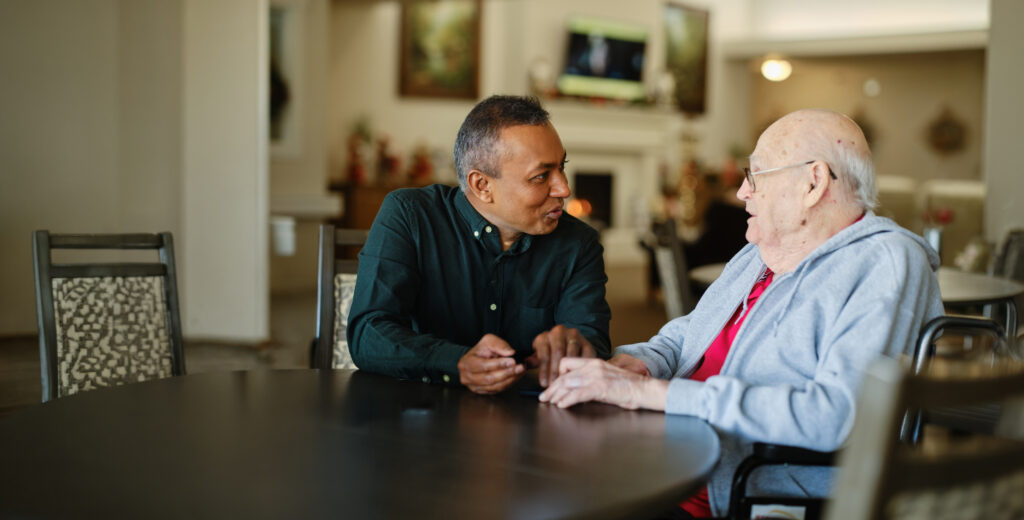
“Dying is a spiritual process. It doesn’t mean it’s a religious one, but it’s a spiritual one,” he says.
His work extends beyond the patient to the people who love them. Sometimes, families need help accepting that a loved one is ready to die, even when they aren’t ready to let go. Michael helps them work through those feelings and find meaningful ways to preserve their loved one’s memories.
 One way is through a legacy book, which gives a person the opportunity to share stories, experiences and wisdom with family members. These books become a lasting connection between generations, helping loved ones remember not only how someone died, but how they lived.
Spiritual care complements the physical and emotional support patients receive. Together, these forms of care help people work through questions about their future, their families and what gives their lives meaning. Spiritual care meets those deeper needs, offering comfort and support in ways that feel right for each person.
Michael knows that support doesn’t end when a patient’s life does. After a patient passes away, he makes condolence calls to family members. A few months ago, he reached out to a husband whose wife had died. Although the man seemed to be coping, Michael sensed he might benefit from a little more support.
Michael visited the man, and they shared a cup of coffee and talked. Later, the husband sent Michael a message to let him know he was doing well. For Michael, that follow-up was meaningful. Taking the time to sit together had helped the man find a sense of closure.
These moments are a reminder that spiritual care is not always about having the right words or answers. Sometimes, it’s about recognizing when someone needs support and being willing to show up.
Donor generosity helps make this work possible. Gifts can provide resources, such as legacy books and communion supplies, and help spiritual counselors offer personalized care that honors each person’s beliefs and traditions. Donor support can also fund continuing education, helping team members deepen their understanding of different faiths and cultures.
A serious illness, a health crisis or another unexpected change can leave people searching for purpose and reassurance. Your generosity helps ensure that, in those moments, people have someone to turn to.
This Spiritual Care Week, you can honor a spiritual counselor who has made a difference in your life, remember a loved one, or make a gift to help more people experience the comfort of spiritual care. Your support ensures that patients, families and team members receive the compassion and understanding they need, when they need it most.
About Ecumen
Ecumen is a nonprofit organization dedicated to providing innovative housing, health care and community-based services that support older adults and strengthen communities. Mission-driven since its founding in 1862, Ecumen’s legacy of service reflects a commitment to honoring those it serves. Ecumen is based in Shoreview, Minn., and provides housing options such as independent living, assisted living, memory care, short-term rehabilitation and long-term care. Its diverse in-home and community-based services include home care, hospice, physical and occupational therapy, and adult day services. For more information, visit www.ecumen.org.
Ecumen, University of Minnesota Establish Nursing Collaboratory
Ecumen, University of Minnesota Establish Nursing Collaboratory
By Lisa Hawks | October 20, 2026
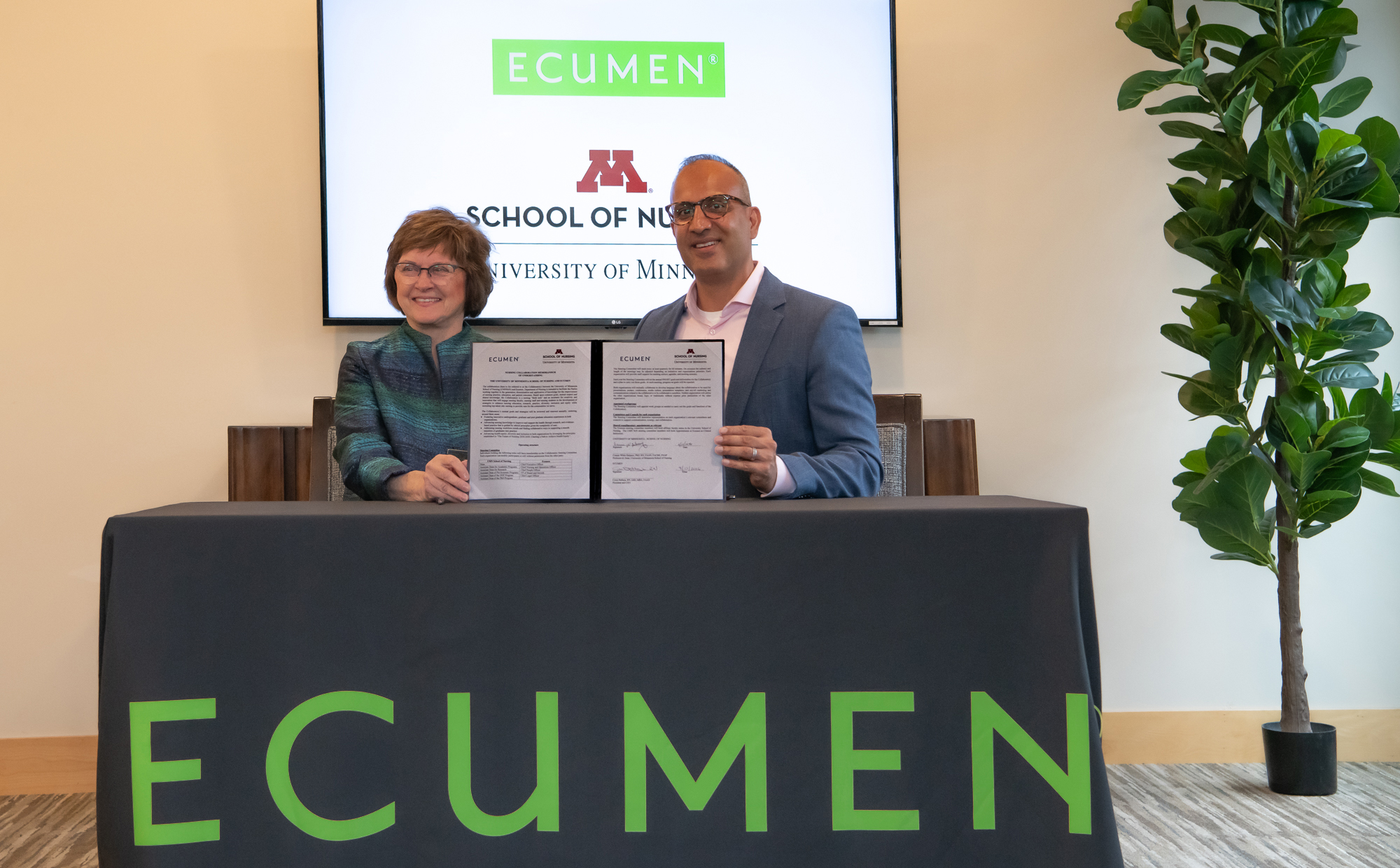
SHOREVIEW, MN (October 20, 2026) — Ecumen, a leading nonprofit provider of senior housing and care for older adults, and the University of Minnesota School of Nursing announced the creation of a formal academic-practice partnership, or collaboratory, to generate, disseminate, and apply knowledge for the improvement of nursing practice, education, and patient outcomes.
Nursing collaboratories serve as incubators for creativity and innovation. They aim to develop new strategies to enhance nursing education and professional development, research, practice, diversity, inclusion and equity, and recruit top talent into nursing.
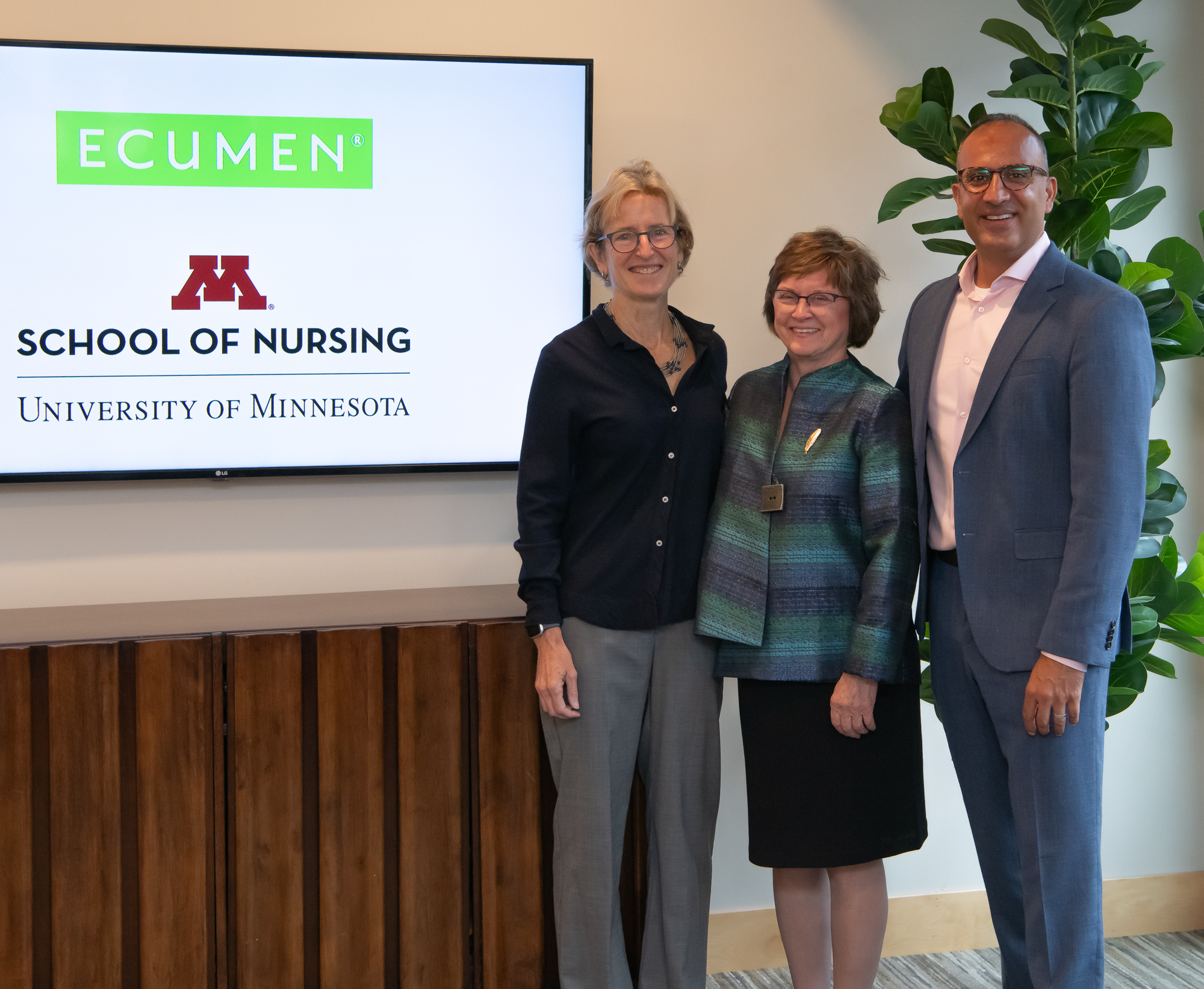
“This brings together the University of Minnesota School of Nursing’s research and educational expertise with the knowledge and experience of Ecumen’s nurses, team members, residents, and clients,” said Ecumen President and CEO Cyrus Batheja, EdD, MBA, RN, FAAN. “Together, we can translate knowledge into everyday improvements in care and quality of life, support our team members, and help prepare the next generation of nurses. We also see opportunities for older adults and students to share experiences, learn from one another, and enjoy meaningful connections.”
“This collaboratory with Ecumen reflects a shared commitment to whole-person care across every stage of life. It’s a powerful opportunity for us to learn alongside their residents and staff, truly understanding how housing, community, and health intertwine,” says Dean Connie White Delaney, PhD, RN, FAAN, FACMI, FNAP. “By bringing these insights directly into our curriculum and our research, we will be able to better prepare the compassionate, skilled nursing workforce Minnesota urgently needs.”
According to an American Association of Colleges of Nursing (AACN) and American Organization for Nursing Leadership task force, academic-practice partnerships are “an important mechanism to strengthen nursing practice and help nurses become well positioned to lead change and advance health.”
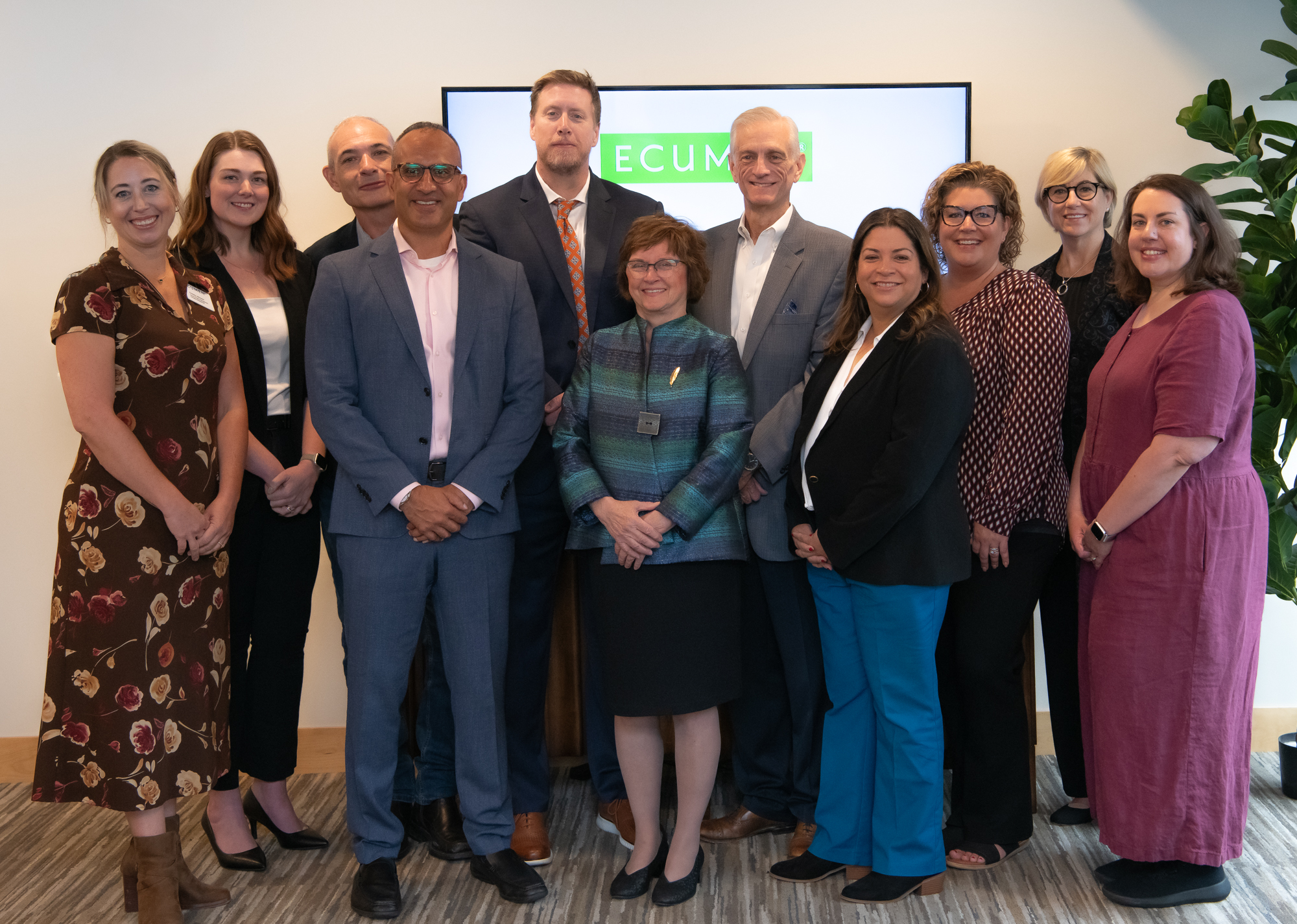
Ecumen becomes the School of Nursing’s 12th collaboratory, joining Allina Health, Children’s Minnesota, Essentia Health, Faith Community Nurse Network, Hennepin Healthcare, Minneapolis Veterans Affairs Health Care System, Fairview Health Services, Mayo Clinic, Minnesota Hospital Association, PrairieCare, and HealthPartners. In 2024, AACN awarded the school an Exemplary Academic-Practice Partnership Award for its “collaboratory of collaboratories,” which gathers leaders quarterly to discuss best practices, coordinate goals, share education and research initiatives, and strengthen lines of communication.
About Ecumen
Ecumen is a nonprofit organization dedicated to providing innovative housing, health care and community-based services that support older adults and strengthen communities. Mission-driven since its founding in 1862, Ecumen’s legacy of service reflects a commitment to honoring those it serves. Ecumen is based in Shoreview, Minn., and provides housing options such as independent living, assisted living, memory care, short-term rehabilitation and long-term care. Its diverse in-home and community-based services include home care, hospice, physical and occupational therapy, and adult day services. For more information, visit www.ecumen.org.
50 Years and Counting — Ecumen Lakeshore Team Member Celebrates Milestone Anniversary
50 Years and Counting…
Ecumen Lakeshore team member celebrates milestone anniversary
By Lisa Hawks | October 9, 2026
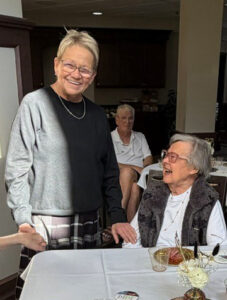 SHOREVIEW, MN (October 9, 2026) — In 1975, when Cathy Firth started at Lakeshore as a dishwasher working alongside her mom, Gloria, in the kitchen, she knew she was in the right place.
“When I started there, making $2.12 an hour, the ladies working in the kitchen just wrapped me in their arms and I knew I’d found home right away,” Cathy said.
What she didn’t realize then is that it would be her work home for the next 50 years, because Ecumen Lakeshore is still home to Cathy. With no immediate plans to retire, she recently celebrated her 50 years with her colleagues, family, friends, as well as Lakeshore residents and tenants.
“In 50 years and counting, Cathy’s impact goes far beyond the years she’s put in,” said Cyrus Batheja, Ecumen president & CEO. “It’s really about the lives she’s touched and the relationships she’s built over the years, which is evident in the people who are here celebrating her today.”
Over the years, she’s taken on a number of roles, including becoming the first woman to serve as Lakeshore’s Environmental Services Manager. Now the receptionist, Cathy has seen incredible changes during her tenure and she’s shouldered tremendous responsibility, such as helping to move residents to Central High School (the highest point in Duluth) during the benzene spill in 1992. Through it all, she has found people — both her colleagues and the residents she serves — that she considers family.
And speaking of family, in addition to her mom who worked at Lakeshore in the 1970s, Cathy’s son and grandson also worked there – marking four generations of her family serving the Duluth community at Lakeshore.
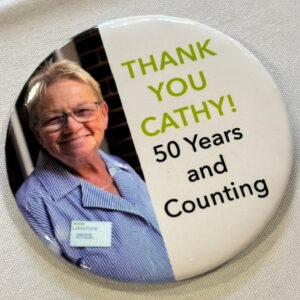 Due to her years of service and dedication to the organization, Cathy is known as Lakeshore’s historian, but as Ecumen Lakeshore executive director, Blaine Gamst said, “Cathy doesn’t just remember Lakeshore’s history. She helped write the story.”
“Ecumen has been really good to me,” Cathy said. “And it really is home for me. This is my family.”
About Ecumen
Ecumen is a nonprofit organization dedicated to providing innovative housing, health care and community-based services that support older adults and strengthen communities. Mission-driven since its founding in 1862, Ecumen’s legacy of service reflects a commitment to honoring those it serves. Ecumen is based in Shoreview, Minn., and provides housing options such as independent living, assisted living, memory care, short-term rehabilitation and long-term care. Its diverse in-home and community-based services include home care, hospice, physical and occupational therapy, and adult day services. For more information, visit www.ecumen.org.
ECUMEN APPOINTS THREE NEW MEMBERS TO BOARD OF TRUSTEES
Ecumen Appoints Three New Members to Board of Trustees:
University of Minnesota Nursing Dean Dr. Connie White Delaney, Retired Physician Executive Dr. Mark Matthias, and Nutrition & Health Care Executive Margene Reno Join Ecumen’s Board
By Lisa Hawks | September 15, 2026
SHOREVIEW, MN (September 15, 2026) — Ecumen, a leading nonprofit provider of senior housing and care for older adults, today announced the appointment of three new members to its Board of Trustees: Connie White Delaney, PhD, RN, FAAN, FACMI, FNAP; Dr. Mark S. Matthias; and Margene Reno, MS, RDN.
The appointments expand the depth of executive, clinical, and operational expertise on Ecumen’s board as the organization continues to advance whole-person care, workforce innovation, and community health integration across its senior living and aging services.
“We are delighted to welcome Dr. Connie Delaney, Dr. Mark Matthias, and Margene Reno to Ecumen’s Board,” said Marcia Kull, chair of the Ecumen Board of Trustees. “Each of these leaders brings a remarkable range of experience, spanning academic nursing leadership, clinical governance, nutrition, and healthcare administration. Their collective insights will be invaluable as we guide Ecumen’s strategic vision and advance the standard of care for the communities we serve.”
“These three leaders are joining our governing body at a pivotal time for aging services,” said Dr. Cyrus Batheja, president and CEO of Ecumen. “Together, their expertise in health informatics, rural healthcare, nutrition, and medical leadership strengthens our ability to innovate care delivery, empower our workforce, and better serve older adults and their families.”
About the New Trustees
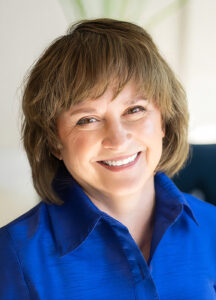
Dr. Connie White Delaney serves as Professor and Dean of the University of Minnesota School of Nursing. A nationally recognized leader in health informatics, interprofessional practice, and systems transformation, Delaney has served as Dean since 2005. She is the Knowledge Generation Lead for the National Center for Interprofessional Practice and Education and the first Fellow in the American College of Medical Informatics to serve as a dean of nursing. Delaney was an inaugural appointee to the USA Health Information Technology Policy Committee (Office of the National Coordinator, U.S. Department of Health and Human Services) and is the author of Leading with Love.
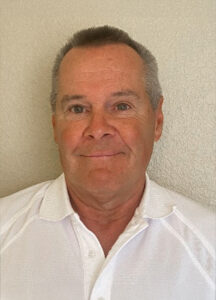
Dr. Mark S. Matthias is a retired board-certified family physician and physician executive with more than three decades of experience in clinical care and healthcare governance. He previously served as Chief Medical Officer at Hutchinson Medical Center, Mankato Clinic, and Rice Memorial Hospital, as well as Vice President of Medical Affairs at St. Cloud Hospital/CentraCare. Dr. Matthias brings extensive expertise in strategic planning, rural health, program evaluation, and board development, having previously chaired the Minnesota Community Measurement Board.
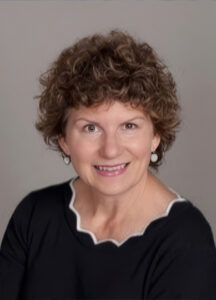
Margene Reno, MS, RDN is a registered dietitian and owner of Nutura Health, a healthcare sales and consulting firm. With extensive experience in hospital and long-term care foodservice operations, Reno represents healthcare manufacturers and has served in multiple leadership roles, including three terms as President of the Minnesota Consulting Dietitians Association. She holds a Bachelor of Science from the University of Wisconsin-Stout and a master’s degree in community health from the University of Wisconsin-La Crosse.
About Ecumen
Ecumen is a nonprofit organization dedicated to providing innovative housing, health care and community-based services that support older adults and strengthen communities. Mission-driven since its founding in 1862, Ecumen’s legacy of service reflects a commitment to honoring those it serves. Ecumen is based in Shoreview, Minn., and provides housing options such as independent living, assisted living, memory care, short-term rehabilitation and long-term care. Its diverse in-home and community-based services include home care, hospice, physical and occupational therapy, and adult day services. For more information, visit www.ecumen.org.

Nutrition Myths vs Facts
NUTRITION MYTHS VS FACTS
By: Toni Swanson | June 15, 2026
As we transition from spring into summer, it’s natural to notice changes in our routines—including what we eat. This time of year often brings fresh foods, outdoor gatherings, and new nutrition trends. One question I hear frequently is: what’s actually true when it comes to nutrition? While trying new foods and ideas can be exciting, not every trending claim holds up under closer look. This month, we’re breaking down a few common nutrition myths so you can confidently separate fact from fiction and focus on what truly fuels your body.
-
- Myth #1: you need to “detox” after eating unhealthy foods
Your body already has a built-in detox system—your liver, kidneys, and digestive system are working around the clock to do just that. Rather than turning to restrictive cleanses after a “cheat day,” focus on consistent, supportive habits like staying hydrated, eating fiber-rich foods, and including a variety of fruits and vegetables. Occasional indulgences are part of a balanced lifestyle—they don’t undo your progress or prevent you from getting back on track with your goals. - Myth #2: carbohydrates are bad for your body
Carbohydrates are one of the body’s primary macronutrients and a key source of energy for our cells. With busy, active summer days, they’re more important than ever. The key is choosing quality sources—like whole grains, fruits, and vegetables—which provide fiber, sustained energy, and essential nutrients. A balanced approach helps your body perform and feel its best. - Myth #3: organic foods are healthier than non-organic foods
The most important factor is eating a variety of nutrient-rich foods—whether organic or not. Health benefits come from consistently including fruits, vegetables, whole grains, lean proteins, dairy (or alternatives), healthy fats, and plenty of water in your routine. Both organic and conventional foods can be part of a healthy diet.
- Myth #1: you need to “detox” after eating unhealthy foods

✨ Tortellini Summer Salad ✨
Ingredients:
1 bag tortellini pasta
1 ½ cup cherry tomatoes- cut in half
2 cups spinach
1 cup mozzarella pearls
2 Tbsp pesto
2 Tbsp olive oil
Salt & pepper to taste
Optional: grilled chicken or chickpea beans for extra protein
Instructions:
Cook tortellini according to packaging directions. Mix the rest of ingredients in a big bowl with cooked and cooled pasta. Serve cold—Enjoy!
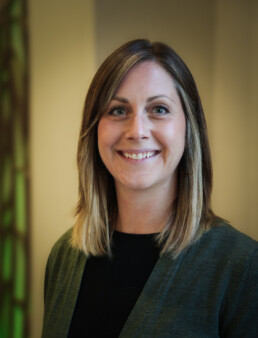
Serving as Corporate Dietician at Ecumen, Toni Swanson is a Registered Dietitian Nutritionist and a Board-Certified Specialist in Gerontological Nutrition with over a decade of experience working with older adults in long-term care and community settings. With a deep commitment to improving the quality of life for aging populations, Toni blends her clinical expertise in nutrition with a growing passion for clinical herbalism to support holistic well-being.

Ecumen Names Lisa Hawks as Vice President of Brand & Growth
Ecumen Names Lisa Hawks as Vice President of Brand & Growth
By Angie Andresen | June 9, 2026
 SHOREVIEW, MN (June 9, 2026) — Ecumen, one of the nation’s leading nonprofit providers of senior housing and health care services, today announced that Lisa Hawks will join the organization as Vice President of Brand & Growth, effective June 15.
In this newly created executive leadership role, Hawks will oversee Ecumen’s integrated brand, marketing, sales, and communications functions. She brings more than 20 years of experience leading brand, communications, demand generation, and go-to-market strategies for high-growth companies and major enterprise organizations.
Her extensive background includes serving as executive vice president of marketing & communications at Nexben; vice president of communications at UnitedHealthcare; and director of communications and marketing at Best Buy. Her proven track record of aligning marketing strategy to business transformation, navigating complex regulatory environments, and building high-performing teams will be instrumental to Ecumen’s mission.
“Lisa’s leadership will help us more effectively tell the Ecumen story, deepen our connection to the communities we serve, and position Ecumen to lead at the intersection of aging, housing, healthcare, and innovation,” said Dr. Cyrus Batheja, Ecumen’s President & CEO. “She is a highly skilled connector and transformational leader who will help us build on our strong foundation while guiding the next chapter of growth, alignment, and impact for the people and communities we serve.”
Hawks holds a Bachelor of Arts in Communications from Augsburg University. She also serves on the Board of Directors for the Foundation for Social Connection in Washington, D.C.

Meal Planning Made Simple
MEAL PLANNING MADE SIMPLE
By: Toni Swanson | May 27, 2026
One comment I hear often is, “Meal prepping is so hard for me. I always try to make a plan, but it never works out.” The good news is that meal planning doesn’t have to be complicated to be effective. As the days get longer and schedules get busier, I’ve found that meal planning is one habit that consistently helps people stay on track with healthy eating—including my own family! In this newsletter I’m going to teach you how you can plan ahead so you can save time during the week, cut down on food waste, and set yourself up for nourishing meals—even on your busiest days.
-
- Start with your schedule, not recipes.
Before choosing meals, take a quick look at your week. Which days will you be busy with meetings/events, and which days will you have time to cook? On busier days, plan for quick meals, leftovers, or slow-cooker options. Save more involved recipes for lighter activity days. Meal planning that matches your schedule is far more likely to stick. - Keep it simple!
You don’t need a different recipe every night. Choose 2–3 core meals and plan to enjoy them more than once. Using simple “mix-and-match” ingredients like grilled chicken, roasted vegetables, and cooked grains. - Build nourishing meals.
Aim for balance rather than perfection. Try to have your meals include:- ½ plate: non-starchy vegetables and/or fruits
- ¼ plate: lean protein (chicken, fish, beans, tofu, eggs)
- ¼ plate: whole grains or starchy vegetables
Using this framework helps ensure meals are filling, nourishing, and energizing.
- Prep ingredients and not full meals.
Meal prep doesn’t have to mean cooking everything in advance and keeps you flexible for schedule changes. Examples of ingredient prep includes:- Wash and chop vegetables
- Cook grains (rice, quinoa, farro)
- Grill or bake proteins
- Pre-portion snacks
- Start with your schedule, not recipes.

✨ Lemon Chicken & Vegetables Sheet Pan ✨
Ingredients:
1 ½ lbs chicken breast
2 cups broccoli florets
1 red bell pepper, sliced
1 red onion, sliced
2Tbsp olive oil
1 lemon (zest + juice)
1 tsp garlic powder
1 tsp Italian seasoning
Salt & pepper to taste
Instructions:
Preheat oven to 400°F.
Place chicken and vegetables on sheet pan.
Drizzle with olive oil, lemon juice & zest. Season with garlic powder, Italian seasoning, salt, & pepper.
Toss to coat evenly.
Bake for 25-30 minutes, or until chicken reaches internal temp of 165°F and vegetables are tender. Enjoy!
Serving as Corporate Dietician at Ecumen, Toni Swanson is a Registered Dietitian Nutritionist and a Board-Certified Specialist in Gerontological Nutrition with over a decade of experience working with older adults in long-term care and community settings. With a deep commitment to improving the quality of life for aging populations, Toni blends her clinical expertise in nutrition with a growing passion for clinical herbalism to support holistic well-being.

Happy International Tea Day!
HAPPY INTERNATIONAL TEA DAY!
By: Toni Swanson | May 21, 2026
At Ecumen, we value everyday wellness practices that bring together nutrition science and traditional plant wisdom. So today, we are highlighting why tea can play a meaningful role in daily routines, how different teas may support the body, and how to choose the right tea for individual needs — whether the goal is energy, relaxation, digestion, or simple hydration.
There are two main types of teas: caffeinated teas and herbal teas (naturally caffeine-free). Caffeinated teas all come from the same plant, Camellia sinesis, and include green tea, black tea, oolong tea, and white tea. Even though these teas all come from the same plant, they are processed differently and that creates the difference. They naturally contain caffeine and unique antioxidant compounds called polyphenols, which support heart health, metabolic health, and inflammation balance.
SHARED FOCUS AREAS
Green Tea
- Least oxidized
- Light, fresh, grassy flavor
- Often associated with antioxidant and metabolic support
Black Tea
Both documents highlight the role of balanced, nutrient-rich dietary patterns in supporting overall health and reducing the risk of nutrition-related chronic conditions. The focus remains on consistent eating patterns rather than individual nutrients.
Oolong Tea
- Partially oxidized (falls between green and black tea)
- Complex flavor – floral, toasty, or fruity
- Moderate caffeine
Our second category of teas are herbal teas. These are naturally caffeine-free and often chosen for targeted wellness support like digestion, sleep, immunity, or stress management. Herbal teas are made from leaves, flowers, roots, seeds, and even barks.
Herbal Teas for Common Needs
- Digestion: peppermint, fennel, ginger, chamomile, dandelion, burdock
- Stress & sleep: chamomile, lemon balm, passionflower, lavender, blue vervain
- Immunity: elderflower, echinacea, thyme, rosemary, holy basil
- Colds & flus: mullein, golden rod, marshmallow root, cinnamon, bee balm
- Inflammation support: turmeric, ginger, chamomile, garlic
- Nourishing: nettle, oat straw, elderberry (typically made into a syrup)
- Emotional support: rose petals, holy basil, lemon balm, lavender, yarrow, cacao
As always, herbal teas are gentle, but they’re still biologically active. If you’re pregnant, nursing, or taking medications, it’s wise to check compatibility and discuss with your doctor.
Tea is more than just a beverage — it’s a daily ritual, a hydration tool, and a gentle way to support the body through the seasons. On this International Tea Day, remember to sip slowly, try something new, and let your tea match how you want to feel.
Happy steeping!
Serving as Corporate Dietician at Ecumen, Toni Swanson is a Registered Dietitian Nutritionist and a Board-Certified Specialist in Gerontological Nutrition with over a decade of experience working with older adults in long-term care and community settings. With a deep commitment to improving the quality of life for aging populations, Toni blends her clinical expertise in nutrition with a growing passion for clinical herbalism to support holistic well-being.
About Ecumen
Ecumen is a nonprofit provider, developer and operator of award-winning living spaces and innovative services for older adults. Mission-driven since its founding in 1862, Ecumen’s legacy of service reflects a commitment to honoring those it serves. Ecumen is based in Shoreview, Minn., and operates properties and services include home care, hospice, physical and occupational therapy, and adult day services throughout Minnesota and neighboring states. For more information, visit www.staging-ecumenv2.kinsta.cloud.